

Understanding the Difference Between Stress, Burnout, and Depression
Many women I work with often describe feeling exhausted, unmotivated, or overwhelmed, but they’re unsure whether it’s stress, burnout, or depression. These terms are sometimes used interchangeably, but they are different experiences that require different kinds of awareness and support.
Understanding the differences can help you recognise early signs and respond in ways that protect your energy, mental health, and overall wellbeing.
Stress: The Short-Term Pressure Response
Stress is usually a situational response to pressure. You might notice tension, irritability, or a racing mind when deadlines pile up, or when life feels overwhelming.
The key with stress is that it’s often temporary and manageable. With rest, support, or a shift in circumstances, stress usually eases.
Burnout: When Stress Becomes Chronic
Burnout develops when stress becomes chronic, and recovery doesn’t happen. It’s not just being tired; burnout impacts you emotionally, mentally, and physically.
You may notice:
Feeling emotionally drained
Loss of motivation or interest in things you normally enjoy
Difficulty concentrating
Disengagement, even while continuing to function
Burnout can look different for everyone. Some people appear to be “coping” on the outside while silently running on empty.
Depression: A Deeper, Broader Impact
Depression is broader and deeper than stress or burnout. It affects mood, energy, and sense of self, and often doesn’t improve simply with rest or time off.
Signs may include:
Persistent low mood or sadness
Loss of interest or pleasure in activities
Low energy or fatigue that doesn’t lift
Feelings of hopelessness or low self-worth
Depression may require professional, therapeutic, or medical support.
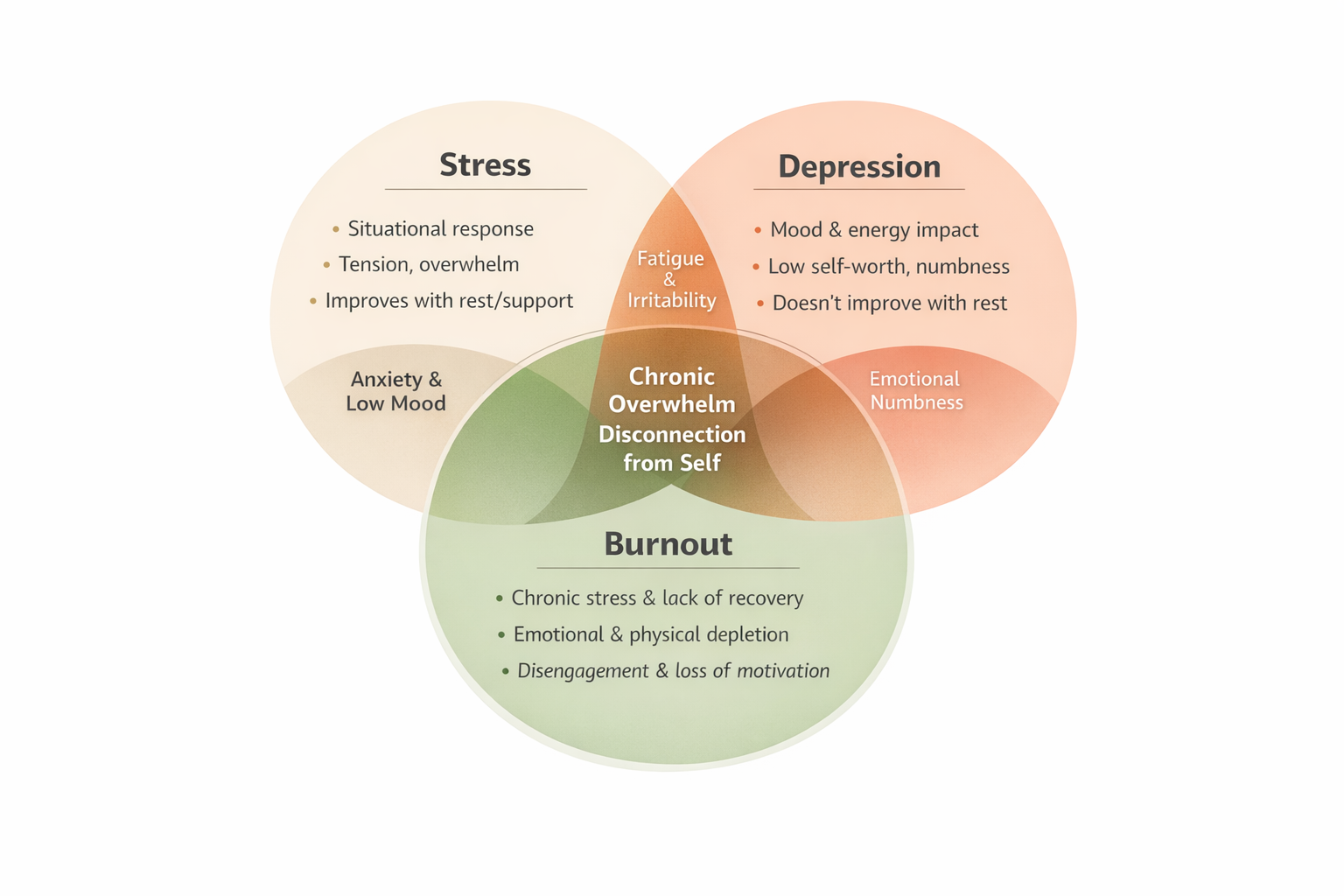
The Venn diagram illustrates how stress, burnout, and depression can overlap. Stress may lead to burnout, burnout can contribute to depression, and all three share some common symptoms, but they are not the same- Copyright Chand Sahrawat 2026.
Where They Overlap
Stress, burnout, and depression are linked — and sometimes their symptoms overlap:
Stress + Burnout → Fatigue, irritability, focus difficulties
Burnout + Depression → Emotional numbness, lack of motivation, persistent exhaustion
Stress + Depression → Anxiety, tension, low mood
All three together → Chronic overwhelm, disconnection from self, and risk of prolonged functional impairment
Recognising the overlaps can help you identify what’s happening earlier and take steps before things escalate.
Why This Matters for Women
Many women are conditioned to keep going — pushing through tiredness, ignoring their body’s signals, and dissociating from the effects of stress. While it may look like resilience, over time, this pattern can lead to burnout or make you more vulnerable to depression.
Trauma-informed support doesn’t just give you tools to “do better.” It helps you reconnect with your body, notice signals earlier, and build sustainable habits that protect your energy and wellbeing.
Support and Next Steps
If you’ve noticed patterns like chronic tiredness, emotional numbness, or constant overwhelm, it doesn’t mean you’re failing. It’s a signal to pause, check in with your body, and create systems that support your energy.
Through Goal Getters, I help women:
Understand how stress, burnout, and trauma impact them
Reconnect with their body and nervous system
Build sustainable habits and routines that work with their nervous system, not against it
If this post has given you clarity or questions about your own patterns, feel free to reach out for a no-obligation chat.
Together, we can explore practical ways to protect your energy, prevent burnout, and feel more in control of your life.